Startup CTO's Handbook
A long-form startup CTO reference that can be read by topic rather than only from cover to cover.
github.comOur notes
Articles, books, courses, playbooks, and people worth learning from. Open the original work, or use our notes to decide where to spend your time.

A long-form startup CTO reference that can be read by topic rather than only from cover to cover.
A freely readable book on shaping work, choosing bounded bets, and giving teams room to solve the details.
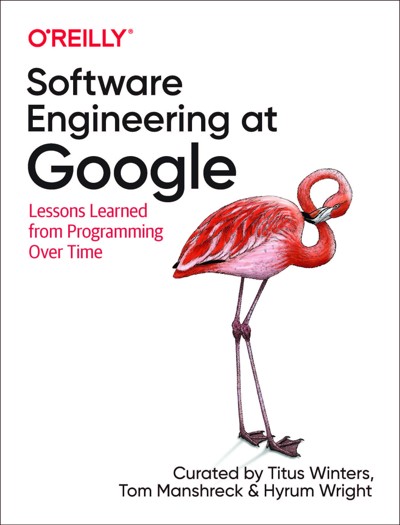
A free book about keeping a codebase healthy over time: engineering culture, processes, tools, and the tradeoffs that come with scale.
Interviews and guides about staff-plus engineering, useful for developing technical leadership without making management the only path forward.
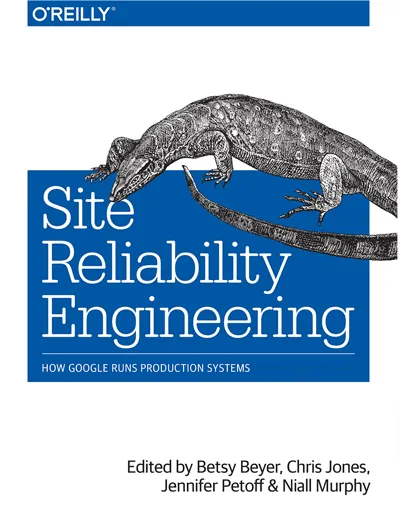
Google’s free book on error budgets, toil, monitoring, on-call, and operating services. Start with the principles before the large-scale machinery.
A leadership discussion community for experienced, new, and aspiring managers. Useful when you need peers to test a difficult management question with.
A first-person account of finding a VP Engineering partner and reshaping the CTO role as Stripe grew.
A clear statement of what managers owe their teams and the support managers should receive in return.
Why a capable candidate can still be wrong for a particular opening, team, or moment.
A classic book about the human side of software projects: working conditions, team formation, leadership, and the organizational obstacles to useful work.
A free, code-first deep-learning course covering vision, language, tabular models, and deployment. A useful hands-on route for an engineering leader returning to ML.
A recorded talk about architecture as a way of thinking: connecting levels, sketching, preserving options, using models, and recognizing tradeoffs.
An explicit career model spanning developers, tech leads, program managers, and engineering managers.
Concise application-security implementation references, organized by topic and maintained by security practitioners.
A facilitated decision exercise that separates the driver, approver, contributors, and people who need to be informed.
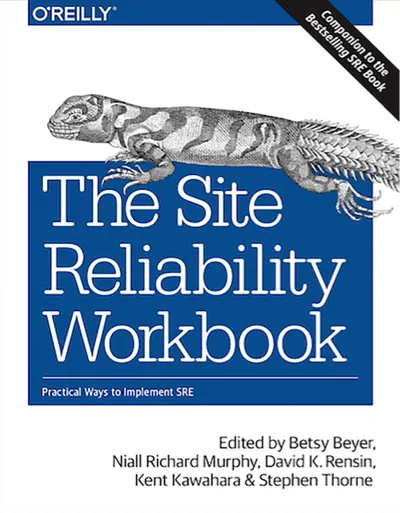
The practical companion to the SRE book, with implementation examples for SLOs, alerting, toil, and organizational change.
Modular ML lessons on regression, classification, data preparation, overfitting, neural networks, embeddings, and production systems.
A peer space for engineering managers, team leads, and others managing people in technology, with explicit confidentiality and conduct rules.
A runnable retrospective play for reflecting on recent work and choosing improvements, with preparation and facilitation instructions.
A team exercise for making responsibilities, overlaps, and unowned work visible before those gaps cause delivery problems.
A library of facilitated team exercises covering goals, decisions, planning, and knowledge sharing. Best used by picking a specific play for a specific problem.
A structured application-security requirements reference for discussing verification scope with engineers, security reviewers, and suppliers.
A public company career framework to compare expectations and discuss engineering growth in concrete terms.
A concrete account of blameless postmortems, when to write them, and how an organization turns incident reviews into learning.
A hands-on chapter for selecting service-level indicators, defining objectives, and using an error-budget policy to guide reliability work.
Four patterns of senior technical leadership—tech lead, architect, solver, and right hand—that make a vague staff title easier to discuss.
A capability guide to keeping software deployable and making releases low risk, with a clear distinction between delivery and automatic deployment.
How versioned database changes, shared visibility, and communication make schema work part of software delivery rather than a separate release bottleneck.
A gradual approach to modernizing legacy systems by replacing behavior in increments, with attention to why large replacement projects go wrong.
A detailed testing tutorial connecting fast unit tests, integration boundaries, contract tests, and end-to-end coverage to practical code examples.
A compact explanation of recording one consequential architectural decision, its context, consequences, and later superseding decisions.
Why retries can amplify an outage, how timeout boundaries matter, and how backoff and jitter help keep transient failures from becoming overload.
A short historical checklist about the working conditions and engineering practices behind a team. Useful prompts for interviewing an employer.
A challenge to vague “best people” hiring and zero-doubt interview decisions, including the risk of rejecting capable candidates on thin evidence.
Executive-hiring notes about ownership, strategic reasoning, team gaps, and the difference between creating value and protecting an established business.
Early-startup recruiting notes on making the mission visible, building a candidate pipeline, and actively helping people understand why they should join.
A performance-review system with preparation, delivery, follow-up, and a reusable template, grounded in the author’s management experience at Airbnb.
An advice-column discussion of returning to technical work after management, including status, influence, motivation, and the cost of staying away from practice.
An accessible explanation of attention residue and task switching, with practical ways to reduce interruptions in a connected workplace.
Notes on executive attention: gathering information, choosing high-impact activities, managing a calendar, and making meetings serve a clear purpose.
A broad topic index for engineering management, from one-to-ones and delegation to technical strategy, developer experience, and organizational design.
An index of public engineering ladders, articles, frameworks, and presentations, including examples from Dropbox, Etsy, and other organizations.
Public teaching notes on time, networks, faults, safety, liveness, algorithms, and practical production concerns, with links to optional lab work.
A detailed discussion of why microservices appeal, where their operational costs appear, and what to ask before splitting a system.
A concise statement of responsive, resilient, elastic, message-driven systems, with a glossary for discussing these architectural qualities.
A large reading index of performance, scalability, reliability, and real-world architecture case studies, useful for researching a specific bottleneck.
Public incident reports grouped by failure themes such as configuration, time, hardware, and databases. Useful for testing assumptions before an outage.
The original Gitflow explanation, including the author’s later advice to prefer a simpler workflow for continuously delivered applications.
Interactive learning maps for engineering disciplines and technologies, useful for structuring self-study or identifying unfamiliar areas.
A field guide covering data-science hiring, management habits, knowledge sharing, collaboration, and scaling a specialist team.
An overview of data-science roles and organizational models, useful when deciding where specialists should sit and how they connect to product teams.
An engineering-oriented index of pricing, billing, accounting, invoices, payments, tax, fraud, and the systems that connect them.
A focused reading index on software pricing and its implementation, including usage-based models, packaging, and pricing courses.
A founder-focused stock-options handbook covering allocation policies, employee ownership, geographic differences, and company examples.
A candidate-side explanation of job-offer negotiation, including leverage, communication, and why advice depends on power and personal circumstances.
A substantial essay on how technical workers approach compensation discussions, with examples of preparation, framing, and avoidable assumptions.
A practical preparation process built around speaking and rehearsing the talk, rather than mistaking silent slide-writing for performance practice.
A product-metrics framework centered on a measure of customer value, useful for testing whether a team’s activity measures connect to product outcomes.
A product-management resource index spanning discovery, strategy, delivery, metrics, and practical tools. Useful for finding the product perspective on an engineering decision.
An index of mistaken software assumptions about names, time, addresses, identity, geography, and other messy parts of the real world.
A directory of company and individual engineering blogs for finding first-hand technical accounts beyond the same handful of frequently shared articles.
The illustrated 2012 employee handbook describing Valve’s flat organization, self-directed projects, peer feedback, and approach to hiring.
Essays on large software projects, coordination costs, conceptual integrity, and why adding people is not a simple cure for a late project.
The book-length treatment of deployment pipelines, build and test automation, configuration, data changes, and collaboration across delivery roles.
Google practitioners connect security and reliability across system design, implementation, operation, incident response, and organizational culture.
A recorded engineering-leadership talk about AI and automation, the complexity left for people to handle, and the skills leaders should keep developing.
A recorded talk connecting generous communication, disagreement, and just culture to the conditions that help a team raise concerns and work safely.
A free founder-oriented playbook covering the idea, team, product, execution, growth, hiring, and fundraising, with text and audio on the author’s site.
A practical account of using existing work channels to reduce repeated status requests and expose work earlier.
How an engineering leader can adapt large-company experience to a startup without losing the ability to grow.
A concrete reminder to answer the question an executive actually asked before adding background and qualifications.
An organizational view of cycle time: decision layers, meeting size, ownership, and repeated loops.
A concrete API design checklist covering the developer experience, resource design, documentation, versioning, and operational details.
A collection of concrete approaches to aligning expectations and improving the working relationship with a manager.
A coaching approach to accountability that emphasizes inquiry and clear expectations instead of taking the work back.
A critique of roadmaps and staffing systems that assume people with the same title are interchangeable capacity.
An account of the gap between declaring company values and making them visible in decisions and behavior.
Why clear writing becomes a practical engineering skill as teams and responsibilities extend beyond immediate peers.
A concrete view of product work through the artifacts behind vision, strategy, design, and execution.
A first-person explanation of product execution responsibilities and how engineers and product managers divide the inputs.
A live public chapter on engineering management, including onboarding, backup coverage, and technical credibility.
A current public view of financial planning and analysis, including forecasting, business drivers, and cross-functional planning.
A historical explanation of replacing a career framework as a company’s size and team structure changed.
Four different mandates can hide behind the same CTO title. Use them to make your own responsibilities explicit.
A structured approach to entering an engineering executive role, starting with the business and the organization you inherit.
A listening tour for new senior leaders, with concrete prompts for learning what people want changed and preserved.
A founder’s account of how architecture, operations, hiring, and management changed as RevenueCat grew.
An employer-side critique of job descriptions and recruiting practices that fail to answer experienced candidates’ questions.
A classic argument for evaluating practical programming ability through a deliberate interview process.
A concrete look at what an early technical screen can establish before a longer interview.
The current public hiring handbook, connecting candidate experience, interviewer preparation, and recruiting responsibilities.
Why moving between engineering and management can build a stronger career than treating management as a one-way promotion.
A detailed account of redesigning reviews around shared principles and concrete examples of collaboration.
A working model for team meetings, technical reviews, development forums, and engineering-wide questions.
Why a meeting that looks small on one calendar can break the working day of someone who needs uninterrupted concentration.
A practical reflection on choosing management and understanding what changes when the team’s work becomes your responsibility.
Questions candidates can ask about work, culture, delivery, and the company they might join.
A planning sequence that moves between leadership context and team proposals before committing the organization.
A decision-based approach to engineering measurement, separating operating needs from different stakeholders’ questions.
A historical approach to forecasting delivery using recorded estimates and actual outcomes.
How to build agreement around a technical proposal by explaining its disadvantages and assumptions early.
A cautionary account of the costs hidden behind promises of cleaner code and easier scaling through microservices.
Twelve operational principles for applications, with useful starting points for configuration, releases, and process lifecycle.
A practical testing approach built around separable modules, reusable fakes, and making verification easier to perform.
A concrete account of linking failures to improvements in onboarding, tests, deployment, and operational feedback.
A discussion of on-call as shared ownership, including the managerial work required to make it sustainable.
A practical introduction to integrating small changes frequently and reducing long-lived branch divergence.
A recovered live source for the Goldfig security checklist, covering people, accounts, applications, and operations.
A broad security reference collection for finding deeper material once you have identified a specific control or threat.
How database change can evolve with application development through collaboration, versioning, and small migrations.
A concise explanation of why schema transitions become easier when application and database releases can move independently.
An explicitly fictional company story about a data team whose impressive models compete with basic unanswered business questions.
An opinionated distinction between delivering a prescribed feature list and owning a customer problem with a cross-functional team.
An updated classic on evaluating product judgment, technical collaboration, and the ability to work across disciplines.
A language for discussing whether a team controls a task, solution, problem, or broader business goal.
A broad diligence question set spanning product, organization, scalability, and AI/ML operating responsibilities.
Questions that connect technical due diligence to the business, product, team, and ability to operate the system.
A founder-oriented explanation of seed fundraising and the preparation behind telling a company’s story.
A public employee handbook to study for how an organization writes down its own working expectations.
Titles open the original destination. Our selection notes explain the use and context; historical material and archive-only notes are labeled.
How we select